
Is It Time To Fall For Rom-Coms Again?
The romantic comedy genre has been in a drought and we're all thirsty for new content.

I want Hollywood to bring back the rom-com. I want joyful human connection. I want fiery chemistry and enemies to lovers. I want to spend my Friday night sprawled out on the couch with my two best friends, fighting over the salty popcorn and watching two lead characters cheesily fumble into each other's arms.
For some time now, it feels like the rom-com genre has faded into the abyss - taking a back seat to the ever-popular action, sci-fi, and drama blockbusters. Don’t get me wrong, I love the Marvel universe just as much as the next person, and I will be the first person in the cinema when a Mission Impossible film comes out - but in this dingy world where the far right seems to be taking over, we need the kaleidoscope of colour and sheer optimism that comes with a rom-com.
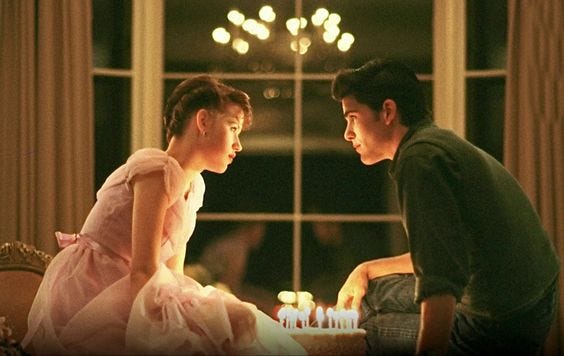
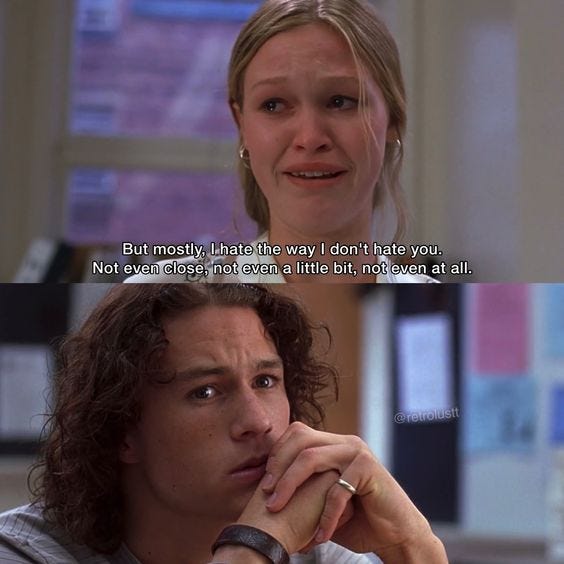
The 80s provided us with the cult classics - The Breakfast Club, Say Anything, Sixteen Candles, When Harry Met Sally, and Dirty Dancing. Decades later we’re still referencing Bender’s air fist after he gets the girl, Samantha and Jake’s kiss over the candlelit cake, the boombox serenade, and “nobody puts baby in a corner”. We loved the 90s for Pretty Woman, Four Weddings and a Funeral, Notting Hill, Clueless, and 10 Things I Hate About You. The 90s introduced us to Hugh Grant and his floppy brown hair, Julia Robert’s big beautiful smile and made us weep when Kat Stratford delivered the line “But mostly I hate the way I don’t hate you, not even close, not even a little bit, not event at all.”
Early 2000s rom-coms hit differently for their nostalgia, characters with aspirational careers and happy ever-afters. How to Lose a Guy in 10 Days convinced us all to go into fashion journalism and made us cringe in the best way possible with all of Andie’s clingy, dramatic and whiny fake acts. She’s the Man showed the importance of equal opportunity and challenged gender roles, whilst delivering some of the best comedic dialogue (yes, gouda is the best cheese). There’s of course A Cinderella Story, where Chad Michael Murray makes it hard to take your eyes off the screen, and we can’t forget about Bridget Jones’s Diary, which is both hilarious and endlessly relatable as it captures the ongoing female pressure to be in a relationship, successful, thin, and be happy all at once.
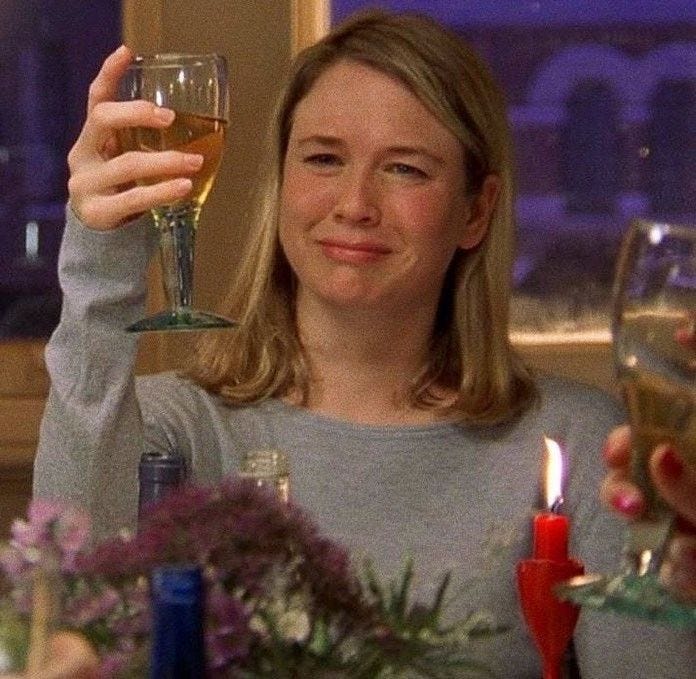
Rom-coms are, however, problematic and not without their faults. Historically, anyone who wasn’t caucasian could only ever play the best friend, maid, service staff, or be a film extra, and the leading characters had to be thin, muscly and heterosexual. Fatphobia was particularly rampant in the 90s/2000s - Bridget Jones was constantly defined by her ‘big pants’ and ‘nine-stone body’ (nine stone, aka 57kg was fat? Yes, it very much was), and films like American Pie and The Ugly Truth were full of jokes that hated women. It's also hard to ignore all the films where the leading female character’s main purpose is to gain the attention of a man and forget the importance of anything else around them - John Tucker Must Die, Legally Blonde, Never Been Kissed.
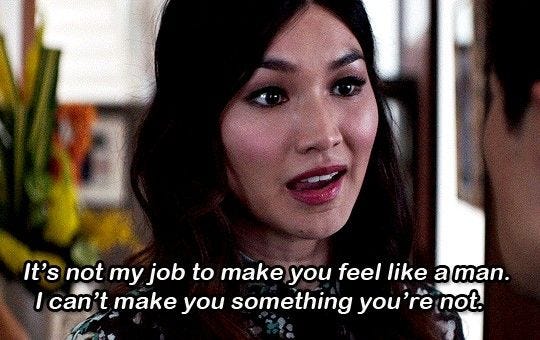
Attitudinal and political changes over the past ten years or so, have however slowly allowed diversity to filter through (finally!!). In 2018, Jon M. Chu’s Crazy Rich Asians graced our screens, which put Asian representation at the forefront and demonstrated that big Hollywood producers like Warner Brothers are willing to share stories outside of white Western culture. That same year, the coming-of-age LQBTQ+ film Love, Simon was released and beautifully showed the complexities of homosexuality, paving the way for 2020’s feel-good Christmas film Happiest Season. Someone Great, Rye Lane, Good Luck to You, Leo Grande, as well as TV series Love Life, One Day, Never Have I Ever, and Bridgerton are also excellent rom-coms from the past few years, that are pushing boundaries and ensuring diversity has a place in the genre.
Yet, despite society's realisation that diverse stories need to be told, it's difficult to represent different types of love and romance when the genre is barely producing new films at all, or subpar ones at best. When Anyone But You, an enemies-to-lovers/fake dating trope film, was released in late 2023, I got that same giddy feeling usually reserved for one of the classics. I remember thinking, gee, when was the last time I saw a good rom-com like this? Was it Netflix’s Set It Up? (the Glen Powell effect is real) or Plus One? But that was at least six to seven years ago. But why is that? Is it because rom-coms typically come with labels like “fluffy”, “girly” or “cheesy”? - words typically associated with films geared towards a female audience because historically women weren’t considered to have the intellect required to consume or act in prestigious films. Or is it because action, drama or fantasy blockbusters with the likes of Leonardo Dicaprio or Ben Affleck make more money at the box office, or because no one is interested in romance anymore?
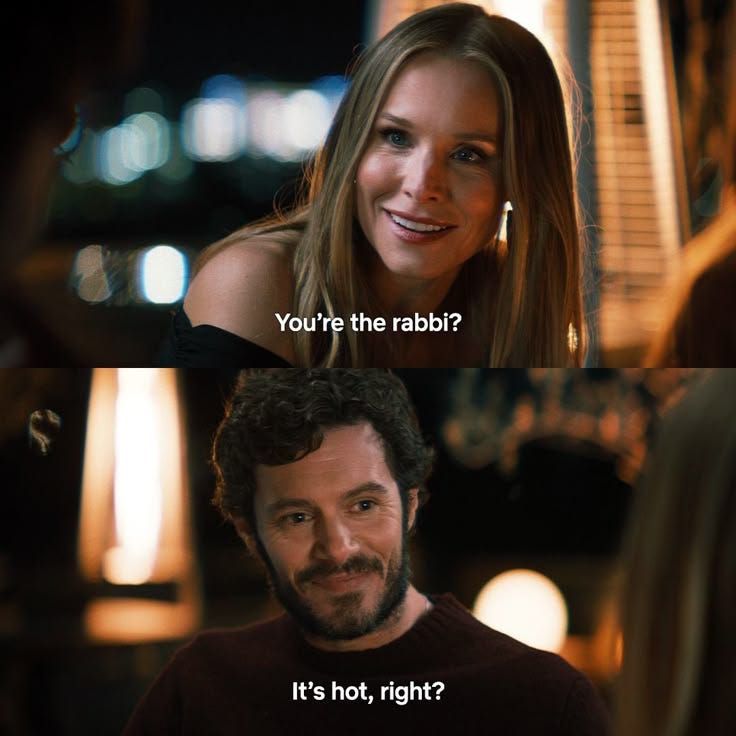
Anyone But You made a total of $219 million USD worldwide at the box office, making it a considerable success for a film with a relatively small budget of $25 million. Just last year, Netflix’s Nobody Wants This (the funniest and most real thing I’ve seen in a while) received 15.9 million views within the first week of its release and as of today has a 94% rating on Rotten Tomatoes. This success proves that we all want to see more romance, all different types of romance, and a good one at that.
On New Years Day rom-com drama We Live in Time with our favourites Andrew Garfield and Florence Pugh graced our screens, and the latest instalment of Bridget Jones: Mad About a Boy is out in cinemas now. We can also look forward to the adaptations of all five of Emily Henry’s best-selling books. With this in mind, I’m hopeful that the romance genre can thrive once more.